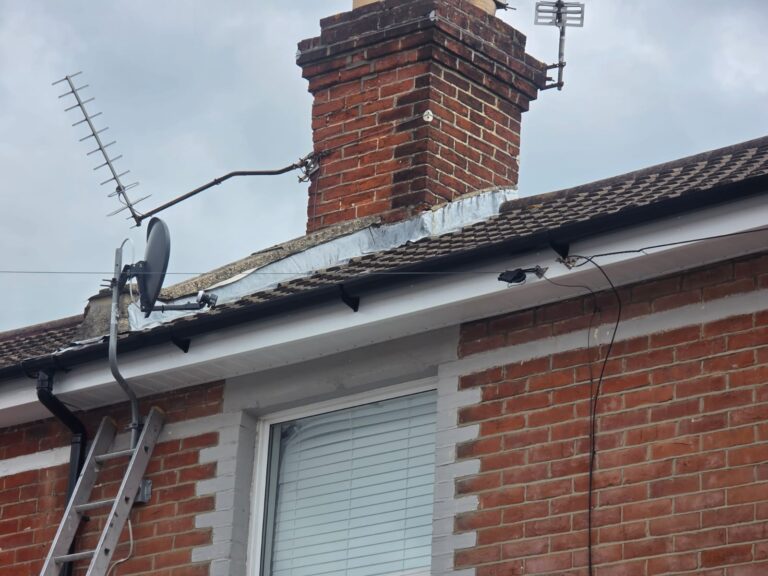
Chimney Leaking? How to Find the Cause and Fix It
Water or a damp patch around a chimney usually comes from one of a few places: worn lead flashing where the chimney meets the roof, weathered brickwork or pointing on the stack, cracked mortar around the chimney pots, or rain getting down an open, disused flue. Sometimes it isn’t a leak at all, but condensation inside a sealed flue or salts in the chimney breast drawing moisture from the air. This guide helps you tell which, and explains how each is fixed.
Chimney damp is easy to misdiagnose, and that matters, because fixing the wrong thing costs money without solving the problem. The single most useful clue is when the damp appears: after rain, or whatever the weather.
All Round Roofing is a family-run roofing company based in Westbourne, with over 25 years in business and more than 7,000 roofing projects completed. Our services include chimney repairs, chimney repointing, lead flashing repairs and chimney removal. Call 07863 768956 for a free quote.
The Quick Checklist
- Note when the damp appears: after rain, or in humid weather regardless of rain.
- Note where it appears: high up near the ceiling, in the loft, or lower down the chimney breast.
- Look at the chimney from the ground for lifted lead, damaged pots, cracks or plants growing from the stack.
- If it’s safe, check around the stack in the loft for daylight, wet brickwork or white deposits.
- Don’t go on the roof. Call a roofer to inspect the stack and flashing.
- Fix the cause first; deal with stained plaster afterwards.
Is It a Leak, Condensation or Salt Damp?
These clues help narrow it down:
- Damp that appears or spreads after rain points to water getting in from outside: the flashing, the stack or the top of the chimney.
- Damp high on the chimney breast, near the ceiling or in the loft is more likely to be coming from the flashing or the top of the stack.
- Damp that comes and goes with humidity, even in dry weather, can point to hygroscopic salts. These are left in the masonry by years of burning coal or wood, and they draw moisture from the air.
- White, powdery or crusty patches on the chimney breast are also a common sign of salts.
- A musty chimney that has been sealed up may have condensation forming inside the flue because there’s no ventilation.
Often more than one thing is going on, for example, a leak that has been fixed but left salts behind in the plaster. That’s why the outside of the chimney should always be checked first.
The Main Causes of a Leaking Chimney
Worn or Damaged Lead Flashing
The flashing is the lead that seals the join between the chimney stack and the roof. If it has lifted, split, or pulled away from the brickwork, rain can run straight in around the base of the stack. It’s one of the most common causes of leaks around a chimney.
Weathered Brickwork and Pointing
The mortar between the bricks of a chimney stack is exposed to wind, rain and frost on every side. As the pointing erodes, water can soak into the masonry and track down inside the building. Frost can also damage masonry just below the roofline.
Cracked Flaunching
The flaunching is the mortar at the top of the stack that holds the chimney pots in place and sheds water away from them. After years of exposure it can crack and break up, letting water down into the stack.
Open Pots on a Disused Chimney
If a fireplace is no longer used but the chimney pot is still open, rain can fall straight down the flue and soak into the chimney breast. Disused chimneys should be capped to keep the rain out.
A Sealed Flue With No Ventilation
Capping or blocking a chimney without ventilation can create a different problem: moist air trapped in the flue condenses and dampens the masonry. Guidance for disused chimneys is to cap them with a ventilated cap and fit a vent where the fireplace has been boarded up, so air can flow through.
Hygroscopic Salts
Salts from burning coal and wood build up in the flue and chimney breast over many years. They absorb moisture from the air, so damp patches can keep appearing even after an outside leak has been fixed, especially when humidity is high.
What You Can Check Safely
- From the ground: use binoculars to look for lead flashing that has lifted or come away, cracked or missing pots, crumbling mortar, a stack that looks as though it’s leaning, or plants growing out of the brickwork.
- In the loft: if you can get there safely, look around the stack for daylight, wet brickwork, damp timbers or white salt deposits. Tread only on boarded areas or the joists.
- Inside: note exactly where the damp patch is, whether it gets worse after rain, and whether the room smells musty.
Please don’t go up on the roof or lean a ladder against the chimney. Chimney stacks are at the highest, most exposed point of the house, and any work there should be left to a roofer with the right access equipment. If the stack looks damaged after high winds, see our guide to checking your roof after a storm.
How Chimney Leaks Are Fixed
- Flashing repairs: lifted lead can be refixed and sealed, and worn or split lead can be renewed.
- Repointing: eroded mortar is raked out and the stack repointed so water can’t soak in.
- Flaunching repairs: cracked flaunching at the top of the stack is repaired or replaced.
- Capping a disused chimney: a ventilated cap keeps rain out while letting the flue breathe, ideally with a vent at the boarded-up fireplace below.
- Chimney removal: where a chimney is no longer needed, removing it can be an option.
Once the source of the water has been dealt with, salt-damaged plaster on the chimney breast may still need attention. That’s usually a job for a plasterer or damp specialist, and it’s best done only after the cause has been fixed.
Thinking About Removing a Chimney?
Removing a chimney stack or chimney breast can free up space and end ongoing maintenance, but a few things are worth checking first:
- Structure. Chimneys can form part of the structure of a house, and removing part of one may need proper support to be put in.
- Building regulations. Structural alterations like this may need building regulations approval, so check with your local council’s building control team.
- Shared chimneys. On semi-detached and terraced homes, a chimney may be shared with next door, and the Party Wall etc. Act 1996 may apply.
We’ll explain what’s involved for your home before any work is agreed.
Frequently Asked Questions
Why is my chimney breast damp when it hasn’t rained?
Damp that appears regardless of the weather often points to hygroscopic salts in the masonry or condensation inside a sealed, unventilated flue, rather than a leak. The outside of the chimney should still be checked to rule out a leak.
Is a leaking chimney urgent?
Water getting into the stack or around the flashing will usually get worse over time and can damage timbers, plaster and decoration, so it’s worth having it looked at soon. If water is coming in quickly, see our guide to what to do when your roof is leaking.
Can I cap my chimney myself?
We wouldn’t recommend it. It means working at the highest point of the roof, and a disused chimney should be capped with ventilation to avoid condensation.
Will fixing the leak make the damp patch go away?
Not always. Salts left in the plaster can keep drawing in moisture after the leak has been fixed, so the plaster may need treating or replacing once the chimney is dry.
Do you repair chimneys?
Yes. Our services include chimney repairs, chimney repointing, lead flashing repairs and chimney removal. Call 07863 768956 for a free quote.
Get Your Chimney Checked
Tell us where the damp is and when it appears, and we’ll help you work out what’s going on. Quotations are free, with no obligation. Call All Round Roofing on 07863 768956 or use our contact page. You can also read about chimney and leadwork on our Roof Repairs & Maintenance page, and find your local page for Chichester, Portsmouth, Havant, Emsworth or Waterlooville.
ALL ROUND ROOFING: IF YOU CAN’T REACH, WHY RISK IT?
For roof repairs across Hampshire and Sussex, call 07863 768956.